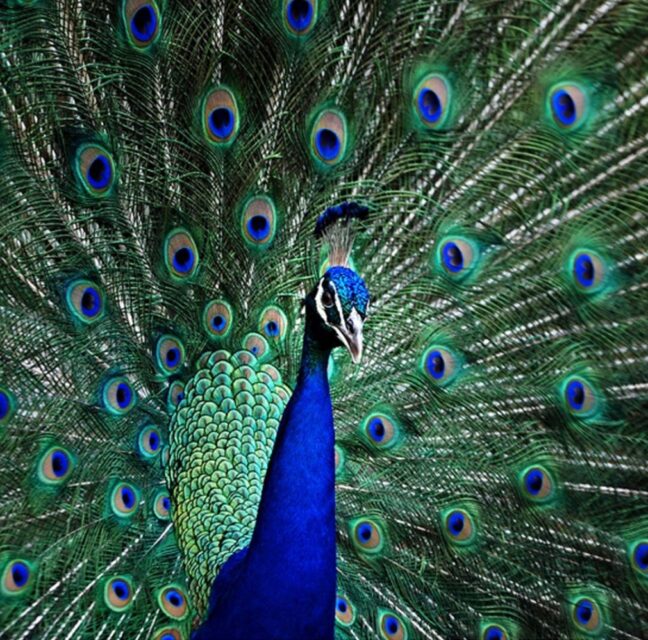

Remember when printing out MapQuest directions before a road trip was standard practice for a smooth journey? Now, GPS can provide quick, efficient navigation saving both time and arguments. Our avian friends need no such assistance from modern technology. Migrating birds remarkably travel the same exact route each year with little to no differentiation. Though, on average, they will travel anywhere between 1,000 to 3,000 miles during fall migration, these distances vary drastically by species. Short-distance migrants may only cover a few hundred miles while extreme distance travelers like the Arctic Tern will fly over 10,000 to 30,000 miles in an annual cycle. Some species, like the Hummingbird, will cross the 700-mile Gulf of Mexico stretch in a single, non-stop flight! Our unique South Florida location in the middle of the heavily traveled Atlantic Flyway provides us with the fortunate ability to care and assist a diverse population of migratory flyers along their journey.
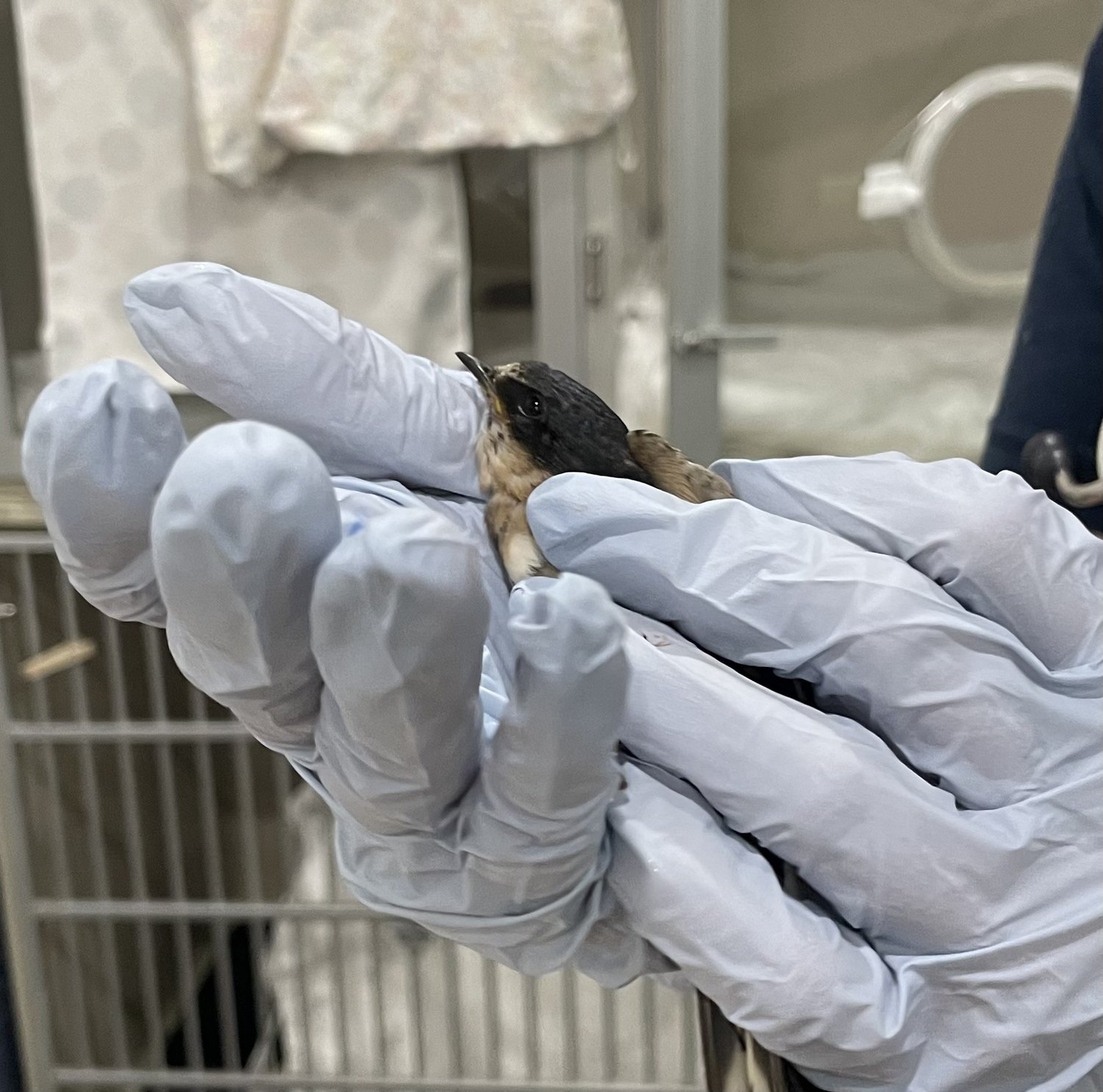
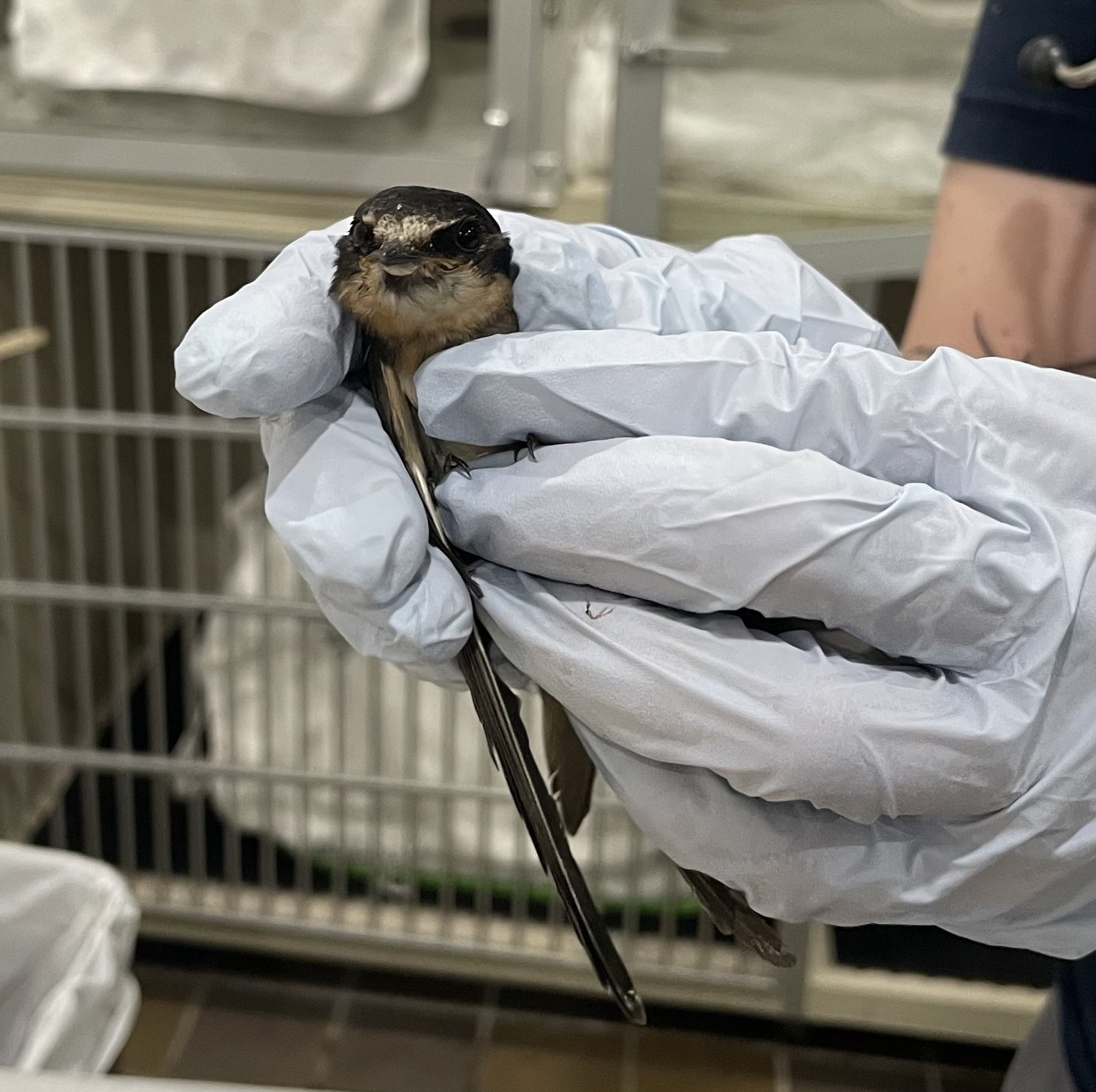
Earlier this month, an adult Barn Swallow (26-5132) was admitted after being found unable to fly near the airport. While it is hard to know exactly what has happened to our wild patients upon admission, examinations and diagnostics reveal differentials leading our staff to build the best treatment plan based on each patient’s presentation. Upon admission, the Barn Swallow displayed symptoms of trauma from likely flying into a building or, potentially, some equipment. Thankfully, radiographs revealed no fractures or underlying concerns. Staff have been administering supportive care and subcutaneous fluids while closely monitoring improvements under intensive care. Barn Swallows spend their nonbreeding (winter) season in Central and South America making Florida a crucial pathway and pit stop at the tail-end of their migration journey.
According to the Cornell Lab of Ornithology, a study using cloud computing data from 143 weather radar stations helped researchers estimate an average of 4 million birds moving south from Canada to the U.S. and another 4.7 million birds leaving the U.S. over the southern border heading to the tropics during fall migration. Birds rely on a few key navigation methods to make these incredible journeys biannually. Young birds on their first migration rely on other members of their group and innate instincts inherited from centuries of genetic programming signaling the correct direction and duration of flight. Interestingly, birds use specialized light-sensitive proteins in their eyes and tiny magnetic particles in their beaks to read Earth’s magnetic field as a compass and map. Daytime migrants will gauge direction using the sun’s position. About 80% of birds are nighttime flyers using the moon and rotational pattern of the stars. As our planet spins, stars appear to move across the sky, tracing circular paths around celestial poles while the North Star remains in the same position due to its alignment with Earth’s northern axis. Visual landmarks like rivers, coastlines, and mountain ranges also help guide their path across familiar and regional terrain.
Prior to concrete evidence of intercontinental migration, many theories circulated about where birds disappeared to in the winter. In documented reports, Europeans believed birds dove underwater to hibernate in the mud, transformed entirely into different species, and some fringe scientific speculation resulted in the idea that birds made the incredible journey to the moon! Around 4th century BC, Aristotle correctly hypothesized that some birds like cranes migrated between Scythia (modern day Ukraine) and the marshes of Egypt, but his observations were largely dismissed in favor of these bizarre migration myths for millennia. In 1822, a White Stork was shot down in a German village. Upon retrieval, the stork had been carrying a 30-inch wooden spear through their neck. Experts examined the weapon and identified the wood and style as originating from central Africa (modern day Chad or Sudan region). The stork, dubbed the Pfeilstorch or Arrow Stork, survived impalement then flew roughly 2,000 miles back to Europe, and was later preserved at the University of Rostock where they remain on display today. This physical evidence dismantled centuries of guesswork launching the birth of ornithology and the modern study of bird migration.
Fall migration runs specifically from August and September to November when birds fly south to escape northern winters in search of more abundant food sources. Florida sits on the terminus of the Atlantic Flyway – a critical north-south funnel stretching over 3,000 miles from the Arctic Tundra down to South America and the Caribbean. As a peninsula, Florida is bordered by water on three sides concentrating birds moving along the east coast before crossing the Gulf or Caribbean. Millions of songbirds, shorebirds, raptors, and waterfowl channel through Florida to rest and refuel before continuing their migration journey. For many species, Florida is their final destination. Unfortunately, global findings show roughly a 45% population decline in migratory bird species because of severe ecological fragmentation. According to BirdLife International assessments, cumulative pressures from climate disruption, intensive coastal squeeze, and changing seasonal temperatures are making it nearly impossible for long-distance migrants to complete their annual cycles safely. Due to their navigational reliance on celestial cues, bright urban lights also disorient them which can lead to fatal exhaustion and building collisions. During migration seasons, we see an influx of these symptoms in admitted migratory birds. You can help prevent migratory collisions and exhaustion through managing nighttime lighting and making windows visible during the day.
How you can help:
- Switch off unnecessary indoor and outdoor lights between the hours of 11:00pm and 6:00am during peak migration
- Point floodlights down and activate motion sensor timers
- Close any window coverings or drapes
- During the day, you can apply patterns to windows using specialized tape or stickers to create a visual barrier for birds
- Installing exterior screens or hanging strings can also prevent windows from mirroring the trees and sky
To support resting birds:
- Ensure all cats are kept indoors during migration so exhausted birds can’t be easily caught
- Place water sources (with a fountain if possible to prevent mosquito dwelling)
- Plant native shrubs and trees to provide tired travelers with natural places to rest and forage
If you find an animal you believe to be injured, sick, or orphaned, please call us for assistance at (954) 524-4302.
ABOUT SOUTH FLORIDA WILDLIFE CENTER
Founded in 1969, South Florida Wildlife Center is one of the nation’s leading wildlife hospitals, providing rescue, rehabilitation, and release services for injured and orphaned native wildlife throughout South Florida. Caring for approximately 8,000 animals annually representing more than 300 species, the Center advances wildlife medicine, conservation, education, and community coexistence while training the next generation of wildlife professionals.
Love what you're reading?
Get the best of Weston delivered to your inbox every month — local stories, events, and good news worth sharing.
Subscribe for Free